A freight tender rarely lands at a quiet moment. The customer sends a spreadsheet with hundreds of lanes, each with its own volume, equipment and special requirements, and a deadline that seldom leaves room to breathe.
Tenders are among the most valuable jobs a forwarder can win. Yet they are often priced in a hurry, because the work around the file eats up the time.
Where the time goes
The heavy part of a tender is rarely the pricing itself. It is everything around it:
- The file has to be understood. Every customer uses its own layout, and lanes, weekdays and time windows can be spread across several tabs.
- Every lane goes out to partners. The same questions go to the same carriers, lane by lane, and the replies have to be chased.
- The replies go back into the sheet. Prices are typed in by hand, and the margin per lane is hard to see until the file is almost done.
Along the way it is easy to miss a lane or the wrong currency. That kind of error is often found only after the tender has been submitted.
Treat every lane as a request
What makes the difference is to stop seeing the tender as one big spreadsheet. See it instead as many small requests that each go through the same flow:
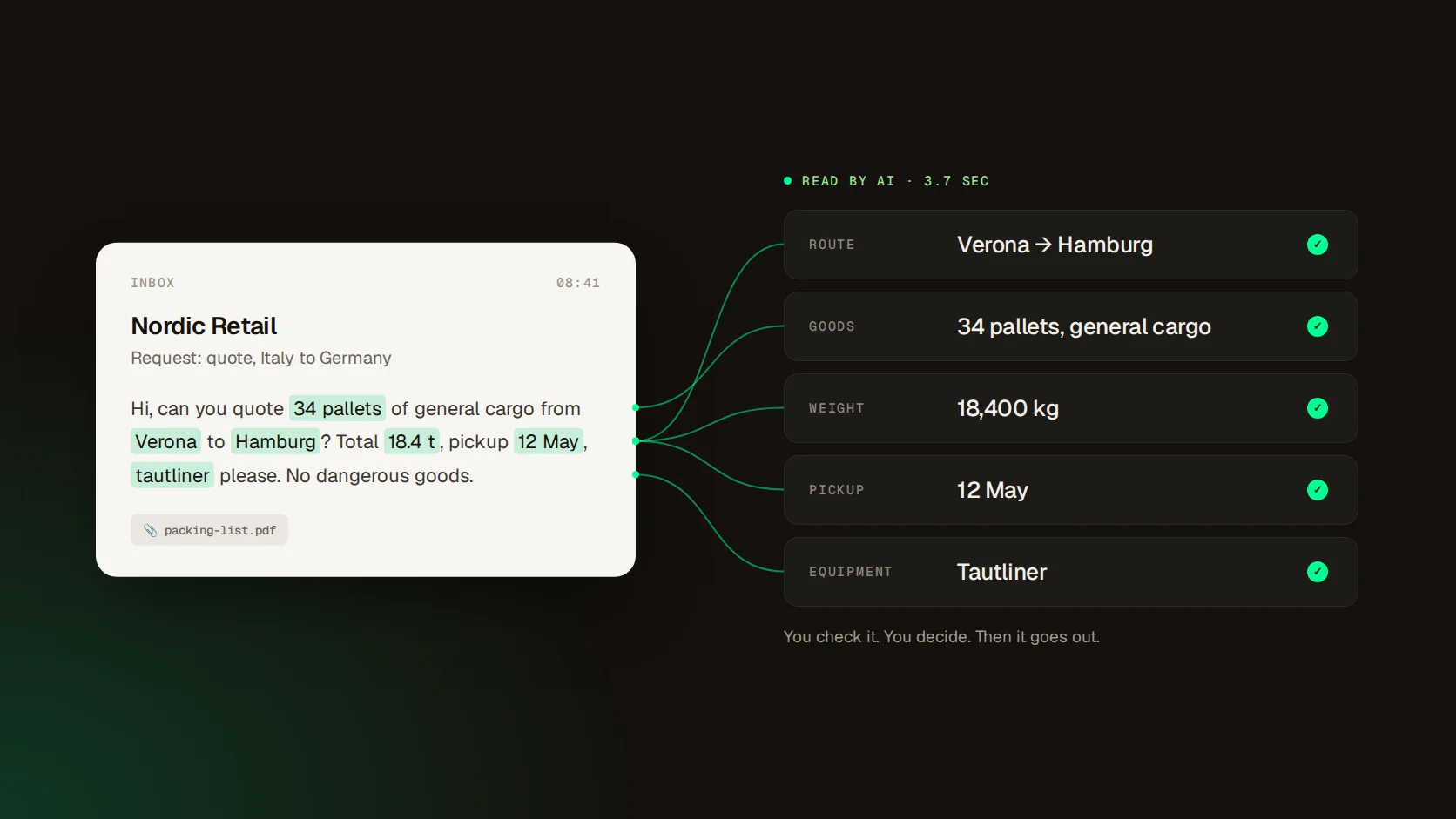
- Read the file once, in a structured way. Find lanes, volumes and requirements, and flag what is missing before you price.
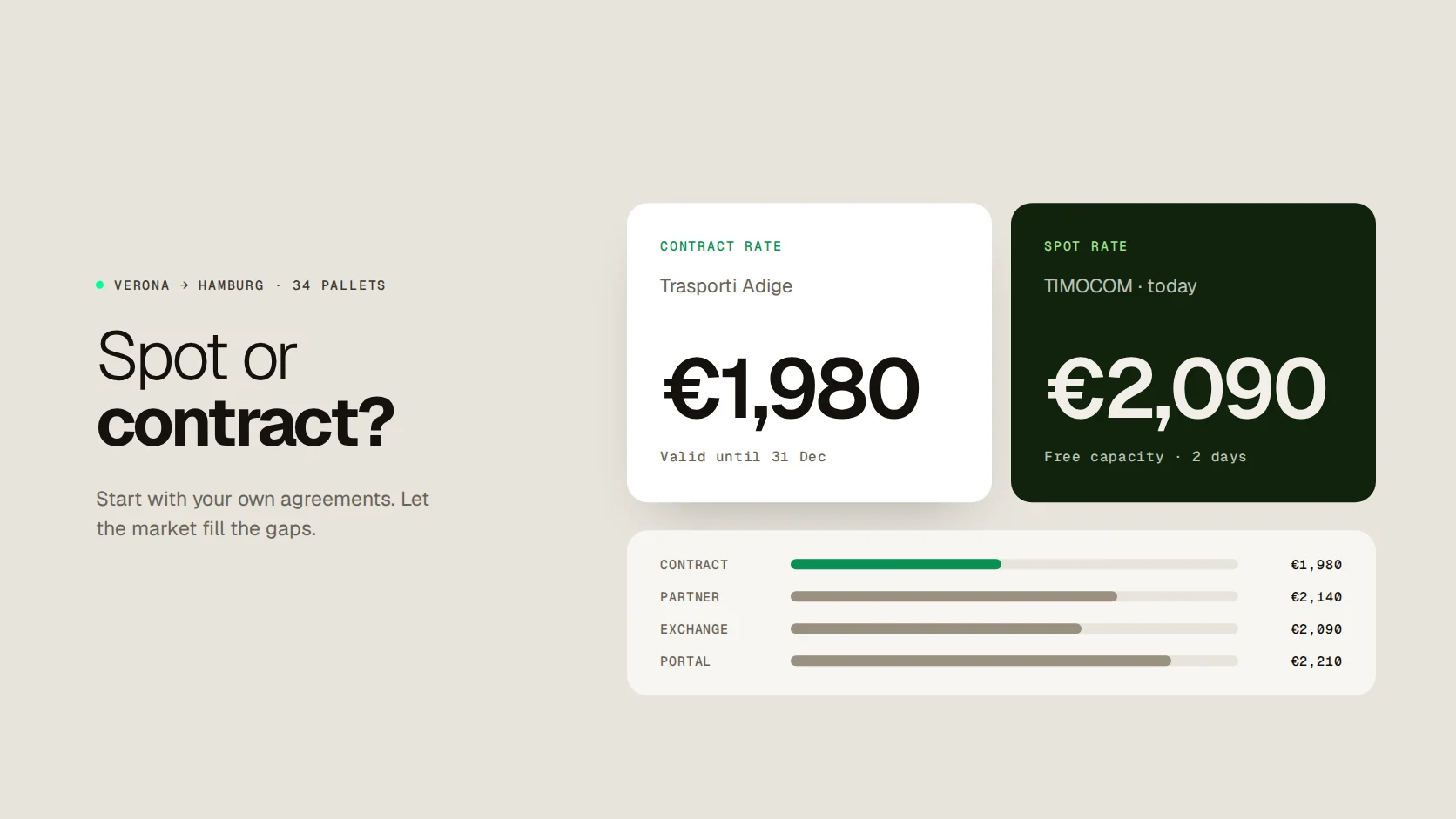
- Price every lane the same way as a spot request. Contract rates and preferred partners first, then the market.
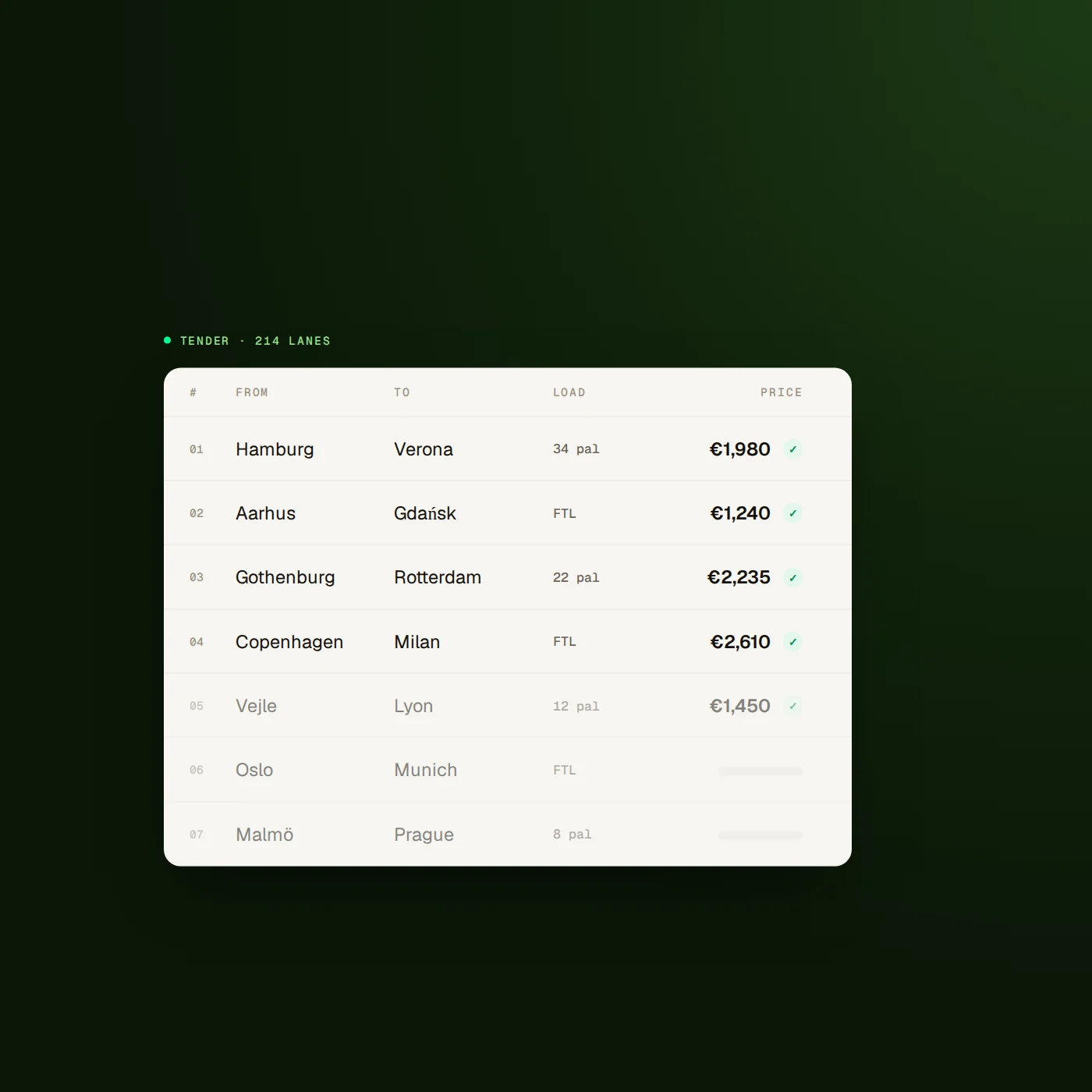
- See price and margin per lane before you send. Then you can choose which lanes to bid on aggressively and which to leave.
When every lane runs through the same flow as your daily requests, a large tender gets the same care as a small one.
It is about overview, not speed
A tender is not won on price alone. It is won on getting the details right: every lane included, currency and validity correct, and the margin chosen on purpose.
That is exactly the kind of work that can be automated while the decisions stay with you. Read more about how Fragta handles tenders.

Send us a real enquiry and we’ll walk you through the full quote in 30 minutes.