When a freight request lands with a forwarder, a race begins. The customer has often sent the same request to several firms, and whoever comes back with a good quote first usually wins the job.
The tempting answer is "then we have to be faster." But speed is rarely decided by how fast a dispatcher can type. It is decided by how easily the necessary knowledge and replies can be gathered.
Where the time actually goes
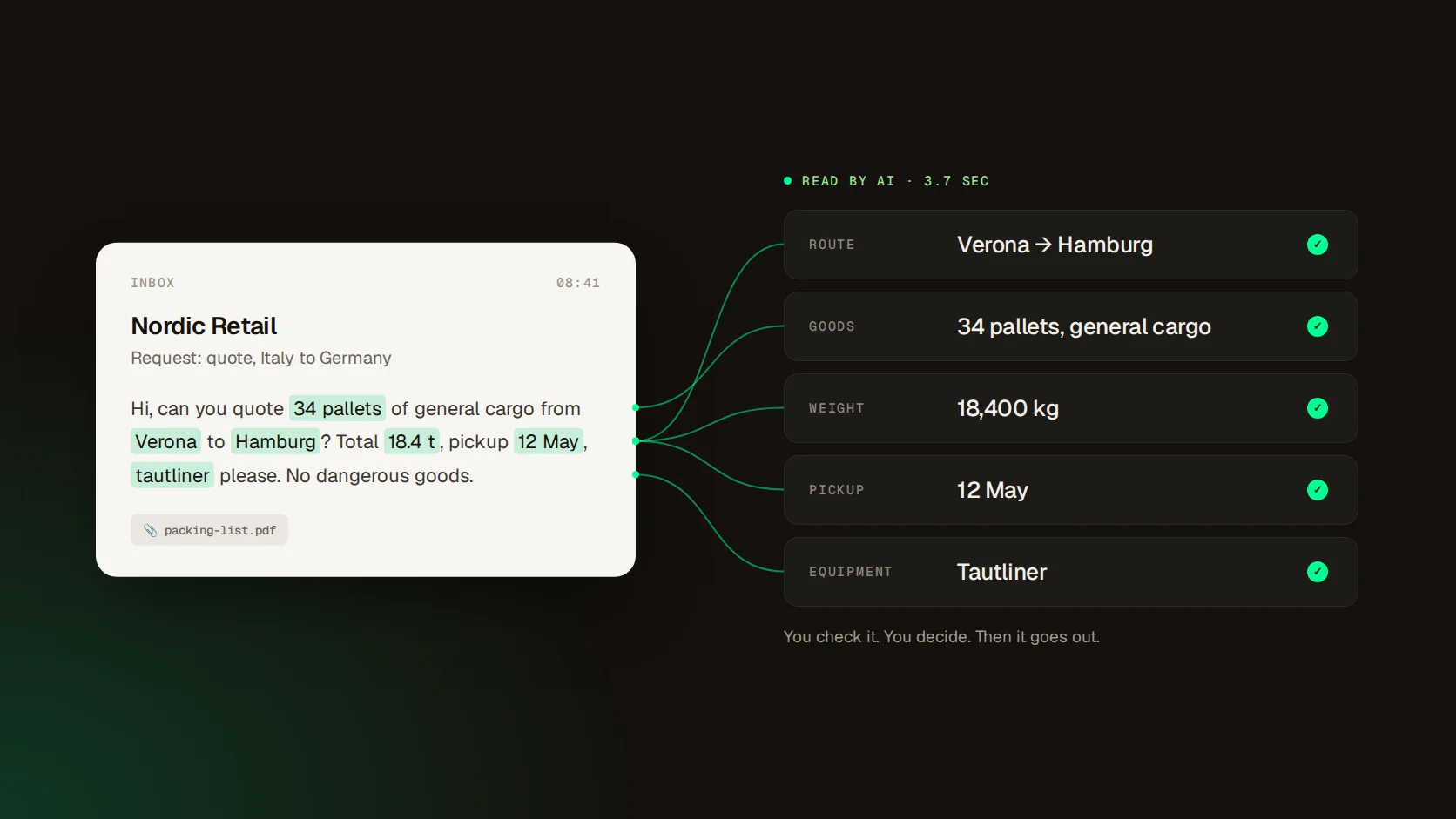
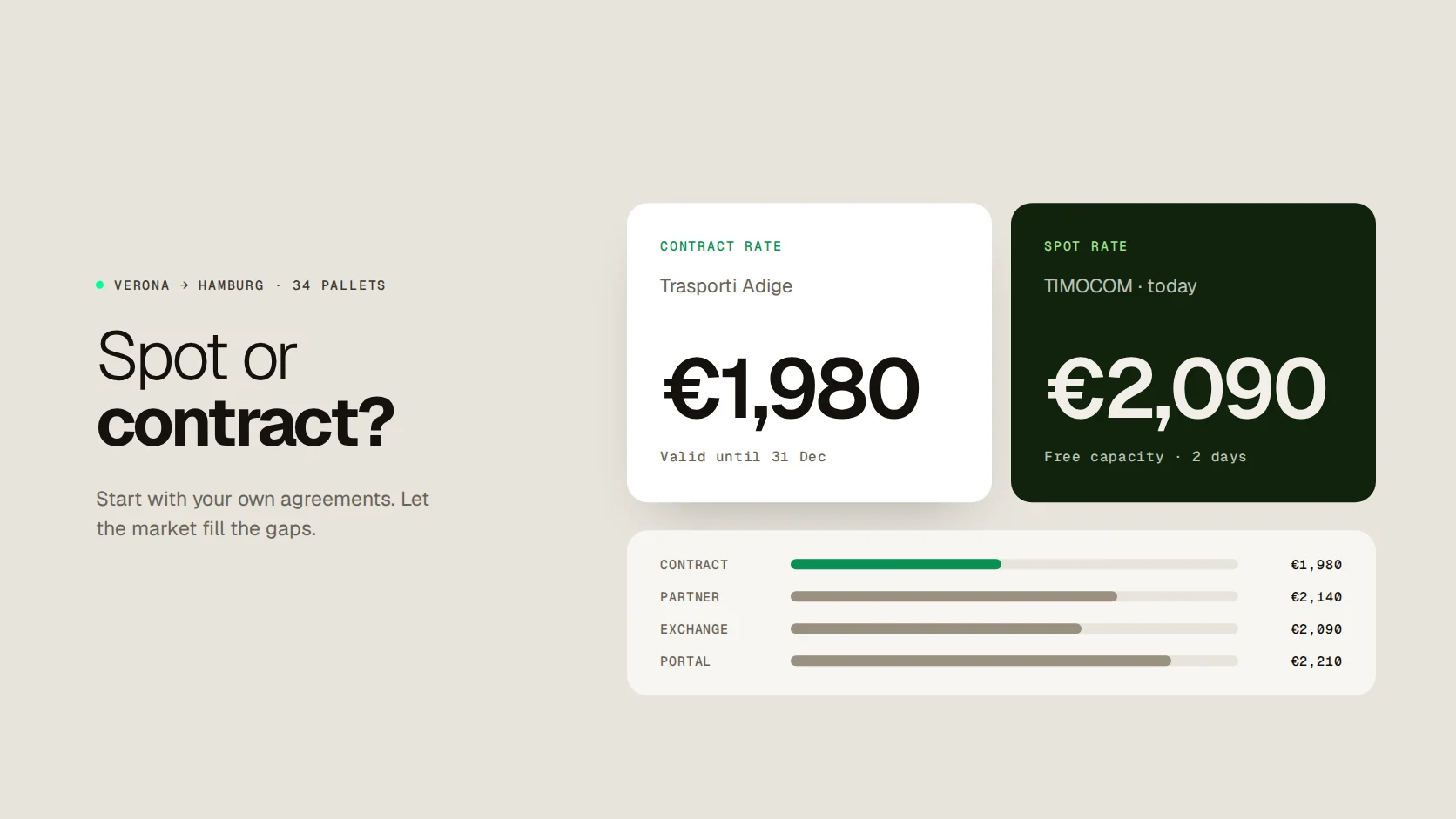
A single request rarely produces a single reply. It turns into a chain: read the request, find the carriers that run the route, write around for prices, wait, chase, compare and report back.
Each step is small on its own. But added together — and multiplied by the day's volume — that is where the hours go. And most of the work is not professionally hard. It is finding, copying and following up.
It is not a speed problem — it is a structure problem
Pushing the individual to work faster solves nothing. The same goes for hiring more people: the same work just repeats across more desks.
The real bottleneck is that knowledge and replies are scattered — across inboxes, spreadsheets and heads. When everything has to be gathered by hand each time, response time stays long, no matter how skilled the dispatcher is.
How you win the time back
The solution is not to chase minutes, but to remove the manual step:
- Gather the basis in one place — carriers, routes, history and prices, so no one has to search.
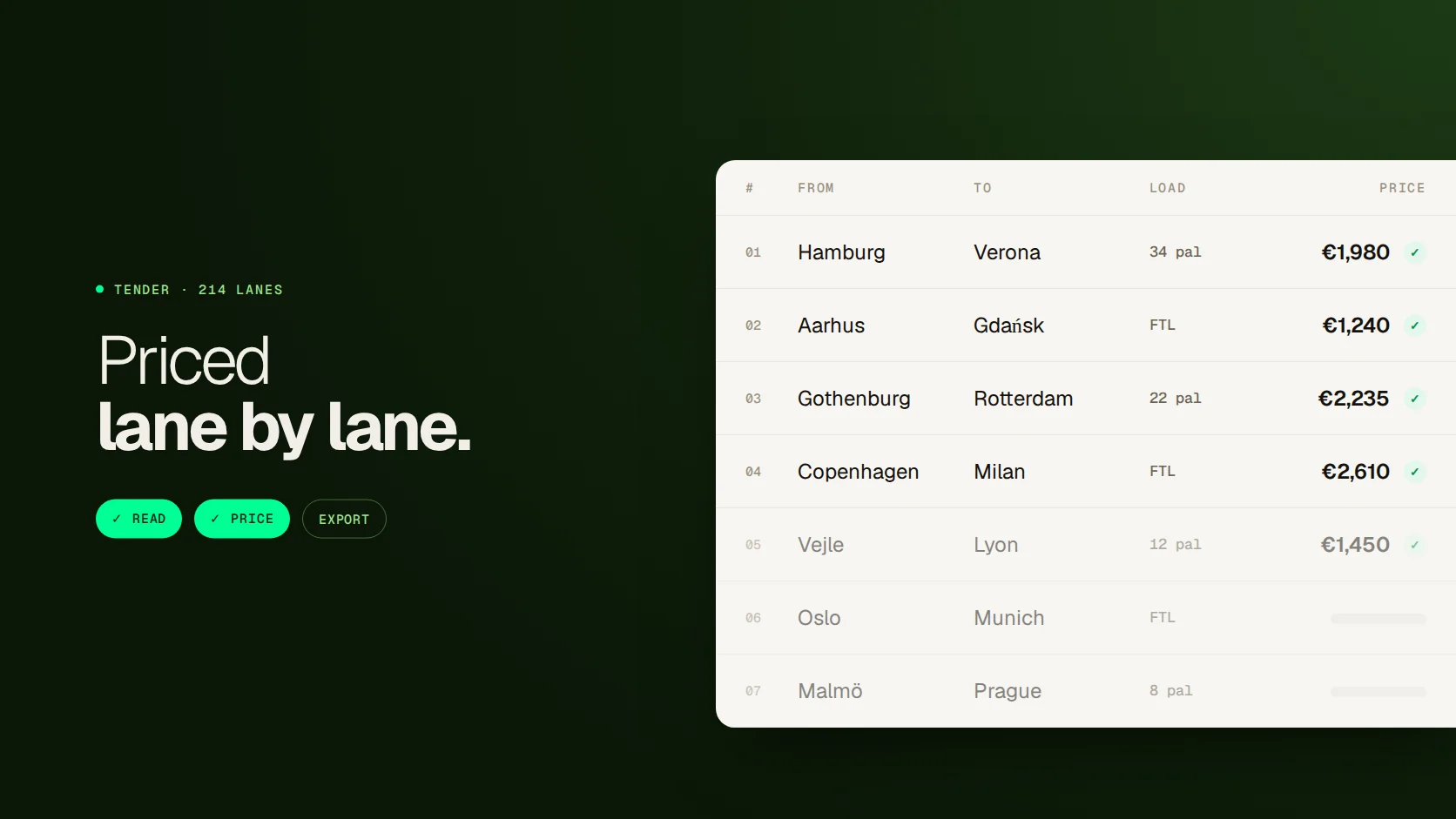
- Let the administrative work happen automatically — find the right carriers, send price requests and gather the replies without manual chasing.
- Keep the human in the decision — the dispatcher assesses and approves, but is freed from the copy-and-paste work.
Once the structure is in place, speed comes by itself. Not because anyone works faster, but because the quote is ready earlier — built on the experience you already have.

Send us a real enquiry and we’ll walk you through the full quote in 30 minutes.